Radiotherapy treatment
Radiotherapy Treatment in Tunisia
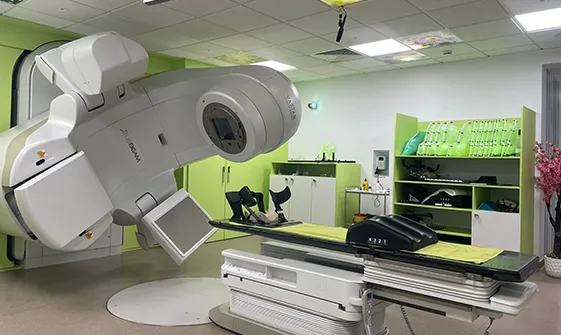
Radiotherapy is one of the most common and effective treatments for cancer. At Ibn Khaldoun Medical Center in Sousse, Tunisia, we use the most advanced technologies to deliver this treatment with exceptional precision — targeting cancer cells while preserving the surrounding healthy tissues.
Radiotherapy uses high-energy radiation (X-rays) to destroy cancer cells or prevent their multiplication. It can be used alone or in combination with surgery, chemotherapy or immunotherapy.
What can be treated with radiotherapy ?
Our center treats a wide range of cancers, including:
 Breast cancer
Prostate cancer
Lung cancer
ENT cancers (nasopharynx, throat, larynx, tonsils)
Brain tumors
Digestive cancers (rectum, stomach, colon, etc.)
Gynecological cancers (uterus, vagina, ovaries)
Skin cancers
Radiotherapy techniques used
At Ibn Khaldoun Medical Center, we offer several advanced techniques adapted to each individual case:
Intensity-Modulated Radiation Therapy (IMRT):
This technique allows the shape and intensity of the radiation to be tailored to the tumour, for optimal precision and better protection of healthy organs.
Image-Guided Radiotherapy (IGRT)
Thanks to 3D imaging performed before each session, we accurately adjust the patient’s position and the beam direction.
Deep Inspiration Breath Hold Radiotherapy (DIBH)
This technique is performed during breath-hold to provide better heart protection, particularly in the treatment of left breast cancers.
Stereotactic Radiotherapy
Used for small tumors (particularly in the brain), this method delivers a high dose of radiation in a single session or a few sessions.
Adjuvant or Neoadjuvant Radiotherapy
It may be administered before (neoadjuvant) or after (adjuvant) surgery to optimize therapeutic results and reduce the risk of recurrence.
The treatment process
Every radiotherapy pathway follows several key stages:
Consultation and Assessment: Our radiation oncologist determines whether radiotherapy is appropriate for your case.
Localization Scan: Detailed imaging makes it possible to precisely delineate the area to be treated.
Planning: Medical physicists and dosimetrists calculate the radiation dose and beam trajectory.
Treatment Sessions: Short and painless, they are generally carried out daily over several weeks.
Regular Follow-up: To adjust the treatment if needed and manage any side effects.
Side effects and their management
The side effects vary depending on the treated area (fatigue, skin irritation, etc.). Our team will help you anticipate and mitigate them through supportive care and personalised guidance.
Why choose Ibn Khaldoun Medical Center ?
State-of-the-Art Equipment: High-precision linear accelerator.
Experienced Team: Radiation oncologists, medical physicists, dedicated technicians and nurses.
Human Approach: Warm welcome, attentive listening, and personalized support.
Conclusion
Radiotherapy is an essential pillar in the fight against cancer. At Ibn Khaldoun Medical Center, we do everything possible to combine cutting-edge technology with compassionate care, in order to offer you the best chances of recovery in the best possible conditions.